I grew up in Minneapolis. Here’s What I Know About How We Fight Back.
Written by Natalie Harris, Movement Law Lab team member and Minnesotan.
Photograph taken by Stephen Grove
I grew up in Minneapolis, a city that, despite its population of nearly half a million people, still feels like a small town. You know someone everywhere you go. Even now, when I go back to visit, it’s guaranteed I’ll run into someone I know within the hour. I love the pride people have for Minnesota; everything is homegrown, homemade, and tight-knit.
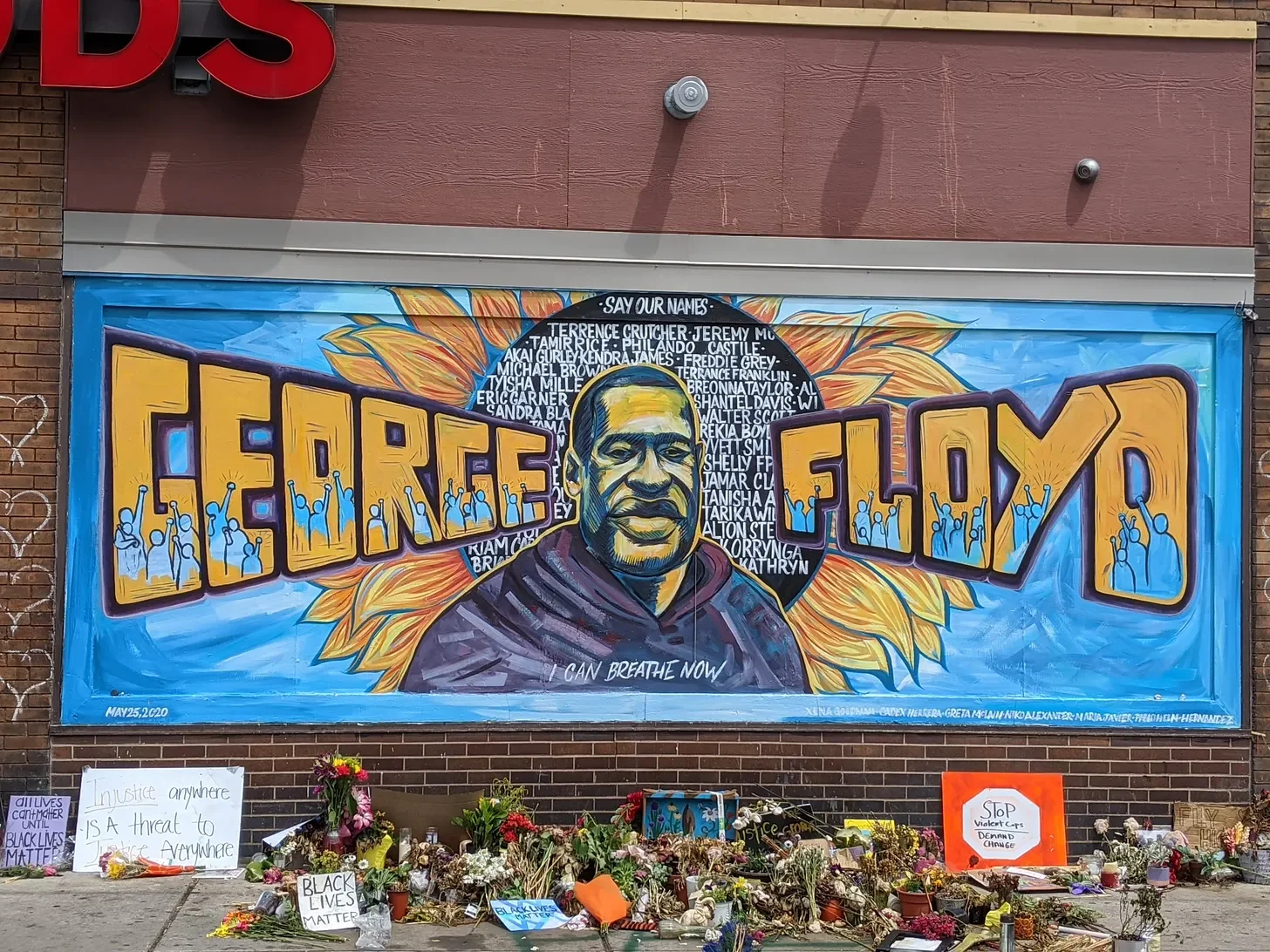
Growing up there in the early 90’s, I witnessed how the city became home to the largest Somali and Ethiopian population outside of their homeland, all hoping for a safe place to live and find opportunity. Fast forward to 2026. They’ve been demonized and scapegoated by the federal government in their crusade against the immigrant community. But to the Trump administration’s dismay, the Twin Cities have not idly stood. Instead, the people are rising up to protect their communities. The Trump administration may not have seen it coming, but those of us who know Minneapolis did. It happened in 2020 when George Floyd was murdered and it’s been activated once again; people rising to protect and fight for their communities.
The Twin Cities have been through so much. When George Floyd was murdered by Minneapolis Police, the city erupted. The city had already dealt with the police killings of Fong Lee, Jamar Clark, and Philando Castile. People were at their breaking points. I was at my breaking point. I was living in Chicago at the time, but in the Fall of 2020, I moved back to my hometown to support the work. I had never considered myself an activist, but growing up as a woman of color in Minnesota, the historical and even present injustices drove my desire to throw down for the cause. The stars aligned, and I started working for a local nonprofit supporting other organizations that had been thrust into the spotlight during the height of the uprising. What I saw then is reminiscent of what I see happening now.
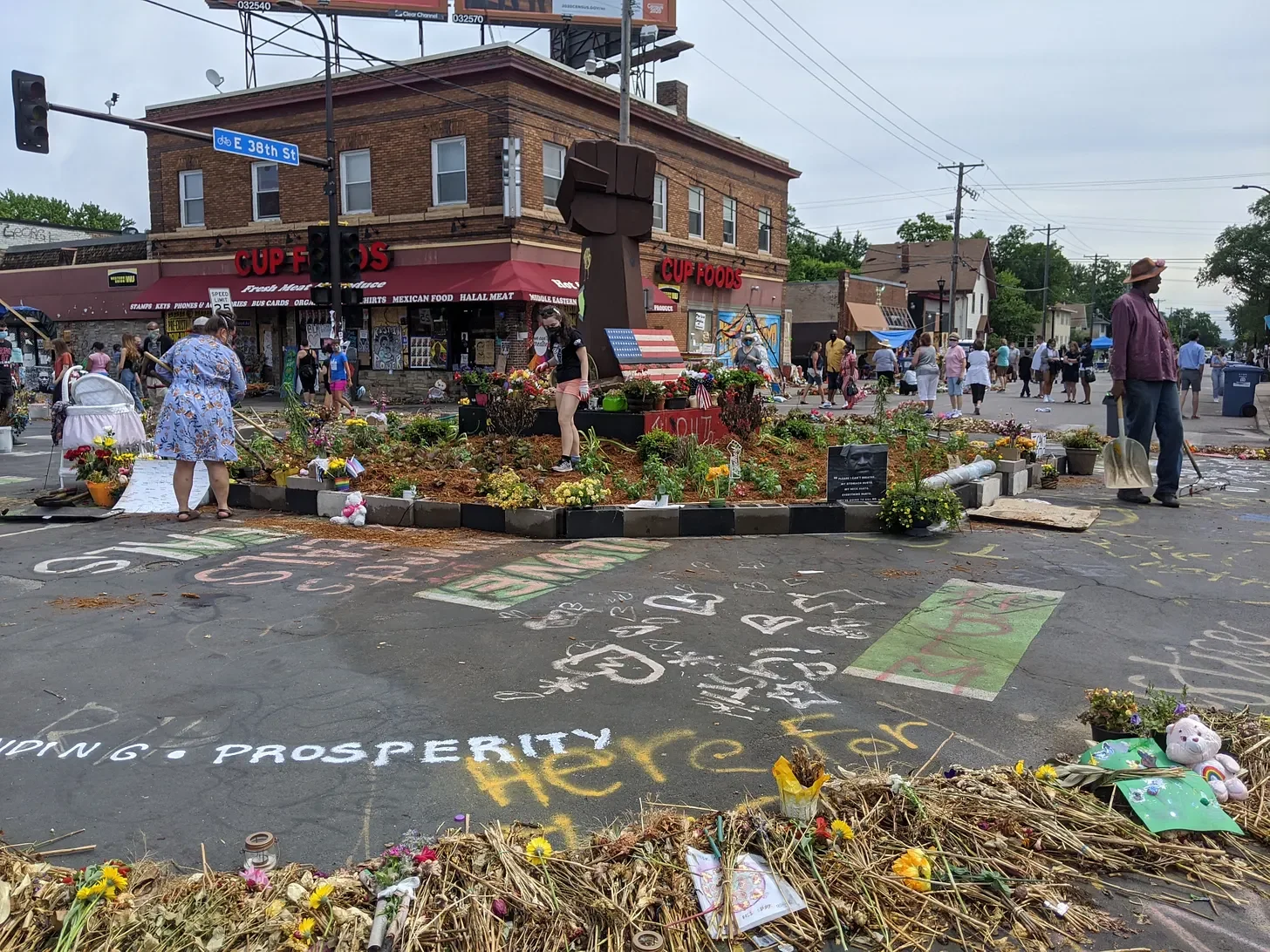
In 2020, amidst a pandemic, people worked arduously to create real infrastructure for mutual aid—neighbors created networks to communicate, patrol, and protect their blocks from bad actors; businesses aligned themselves with neighborhood networks to support folks in need. It was created in a way that was meant to be sustainable, as part of our long-standing values of community; to care for those around us. Now, we’re seeing the fruits of that labor quickly assemble back into place, stronger than before, in response to the federal occupation unfolding. With threats to invoke the Insurrection Act and nearly 3,000 federal agents already deployed to the streets of Minneapolis and St. Paul, immigrants and protestors are now the target of a new wave of state violence with impunity.
Photograph taken by Stephen Grove
The ‘example’ this regime is trying to make out of my hometown will not come without fierce resistance. Minneapolis will not back down, ever, which makes me so proud, but also worried. The tension is like a powder keg waiting for a spark to reignite again. Everyone I know is scared, tired, and mad as hell. Folks are afraid to leave their homes, and there are hundreds, if not thousands, putting their bodies on the line to protect their neighbors. With their purple beanies, school staff are organizing safety patrols for their students. Local businesses and churches are once again serving as distribution points and fundraising to provide groceries and essentials for families. No one feels safe, no matter their background, and what I keep hearing is that whatever we’re seeing coming out of Minnesota, the reality they are living each day is far worse.
Minneapolis is emblematic of the moment we’re in as a country that has undeniably begun the transition into authoritarianism. Stopping authoritarianism now from entrenching itself will take all of us working together and defying it. The Twin Cities is a powerful example of how this looks in practice. When the feds descended upon the Twin Cities, they were ready. And organizers from across the country, many who have faced federal invasions themselves, arrived to support with running Know Your Rights trainings and sharing their wisdom to help neighborhoods create their own Rapid Response teams. So what is next for those of us watching from outside the city?
We need to continue to share the stories and amplify their resistance to ICE/CBP violence and the rampant violations of constitutional rights. We can’t take our eyes off the city. Those who can, please donate to mutual aid efforts so the organizations on the ground can keep supporting those impacted. From my experience in 2020 and most importantly, from my experience as a Minnesotan, I can guarantee this: The community will continue to show up in the streets to interrupt this authoritarian attack on our people. They’re not backing down– nor should they.