
SURVIVAL DIALOGUES
Virtual Gathering Series
What are the Survival Dialogues?
The Survival Dialogues series is a curated set of 8 virtual gatherings that bring together movement lawyers from around the world to make sense of the moment we’re in and strengthen how we respond to it. Not at all a typical webinar, each session will combine political analysis with practices that support emotional, physical, and collective resilience, while strengthening our connection and collaboration in the face of rising global authoritarianism.
Apply by June 29

Why Join the Survival Dialogues?
Here’s what sets the Survival Dialogues apart from conventional webinars and political education spaces:
Holistic Analysis: Rather than treating authoritarianism as isolated national trends, this series deepens collective understanding of the “authoritarian playbook” across interconnected local and global contexts.
People’s Strategies: Participants will learn from both emerging and ancestral “people’s playbooks,” drawing on resistance strategies rooted in diverse movements, histories, and geographies.
Transnational Solidarity: The series intentionally builds meaningful relationships across borders, cultivating solidarity as an active, ongoing practice rather than an abstract principle.
Beyond Traditional Learning: This is not a webinar series—it is a restorative, participatory space that weaves political analysis with popular education, somatic practices, art, music, and ancestral knowledge.
Collective Imagination: At its core, the Survival Dialogues strengthen collective hope and political imagination as shared practices, grounding participants in solidarity and sustaining them for long-term struggle.
The Survival Dialogues are about organizing rage, defending joy, and sustaining hope. All sessions will take a global, holistic approach by weaving sharp analysis with artistic, cultural, and somatic experiences. The sessions, developed in partnership with members of the Global Network of Movement Lawyers (GNML), will cover:
A grounding session that orients participants to the Survival Dialogues’ purpose, methodology, and collective learning approach, situating the series in the current global political moment and planting the core question of the series: How must the people’s resistance playbook adapt in these times?
A deep dive into Hungary as a “laboratory of illiberalism,” unpacking contemporary authoritarian tools and the grassroots organizing, journalism, and coalition-building that inform a transnational people’s playbook of resistance.
A critical exploration of how law, space, and migration intersect in South Africa to produce xenophobic exclusion, while also highlighting legal and grassroots strategies for survival, protection, and justice that resonate across borders.
An urgent examination of Palestine that names ongoing practices of genocide, traces global economic and political complicity, and probes what this moment reveals about the limits and possibilities of international law. Where do we go from here?
A closing gathering that centers survival as a collective political practice, inviting participants to explore how movements organize rage, defend joy, and sustain hope and imagination across long cycles of violence and crisis.
A practice-oriented session on confronting digital repression and tech-driven authoritarianism, grounded in frontline experiences and focused on concrete organizational, personal, and digital security strategies.
An investigation into how protest is criminalized and security forces are militarized through legal and institutional means, alongside the defense strategies movements are developing in response.
A nuanced conversation on the role of courts under democratic erosion, examining both their capture and their potential as contested sites within broader movement strategies to confront authoritarian power.
Meet Our Speakers
-
![]()
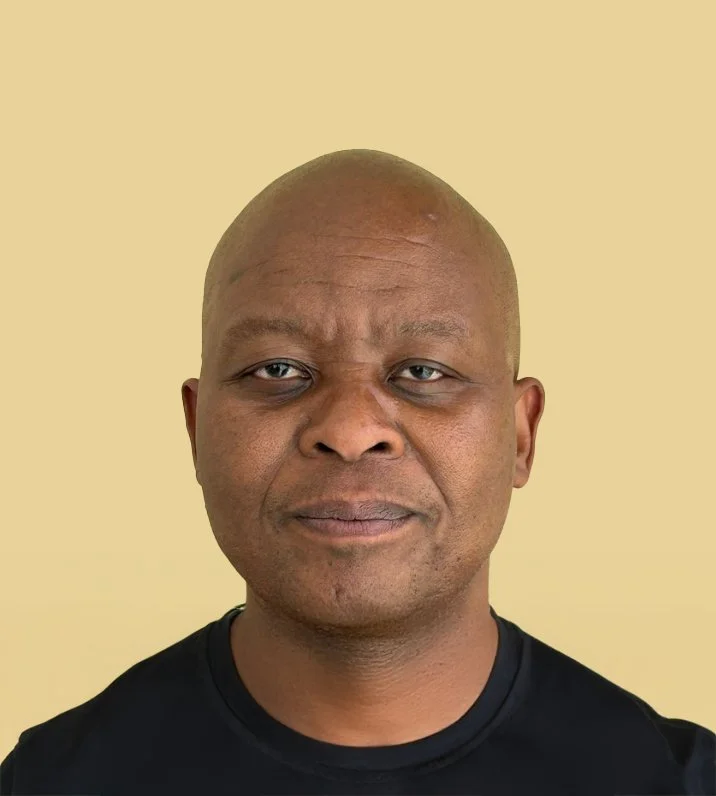
Mazibuko Jara
Mazibuko Kanyiso Jara is a South African pan-Africanist popular educator, strategist, and activist with three decades of work across social justice movements. He is the Executive Director of Zabalaza Pathways Institute in South Africa. He co-founded and led major movements, including the Treatment Action Campaign and the National Coalition for Gay and Lesbian Equality, and served as founding Board Chair of Oxfam South Africa. Mazibuko will be joining us to discuss the current political moment and offer an initial analytical framework for understanding the rise of global authoritarianism.
-
![]()
Danah Abueida
Danah Abueida is a Palestinian lawyer and Legal Officer at the European Legal Support Center, where she works at the intersection of human rights, abolitionist politics, and legal defense of Palestinian advocacy in Europe. Trained in European law at Maastricht University, she draws on her experience in Gaza and a commitment to revolutionary love, collective care, and solidarity with prisoners and communities under repression. Danah will be joining us for Session four to present on the legal landscape beyond genocide, including sanctions regimes, banking restrictions, and indirect or “unspoken” sanctions.
-
![]()
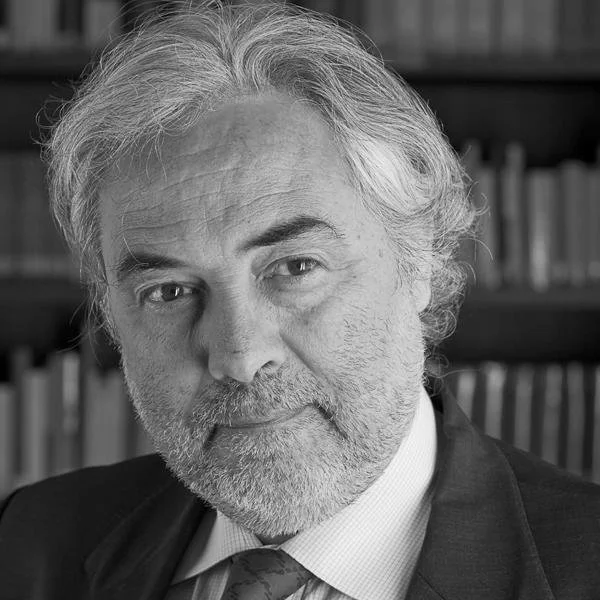
Javier De Lucas Martin
Javier de Lucas is a Spanish legal philosopher, political theorist, and founding director of the Human Rights Institute at the University of Valencia. He is a leading scholar on human rights, migration, and asylum policy in Spain. Since 2019, he has served as a senator for the Spanish region of Valencia. Javier will be joining us for Session Three to discuss how anti-migrant policies, border enforcement, detention practices, labor precarity, and xenophobic narratives are being mobilized to redefine belonging and legitimize exclusion.
-
![]()
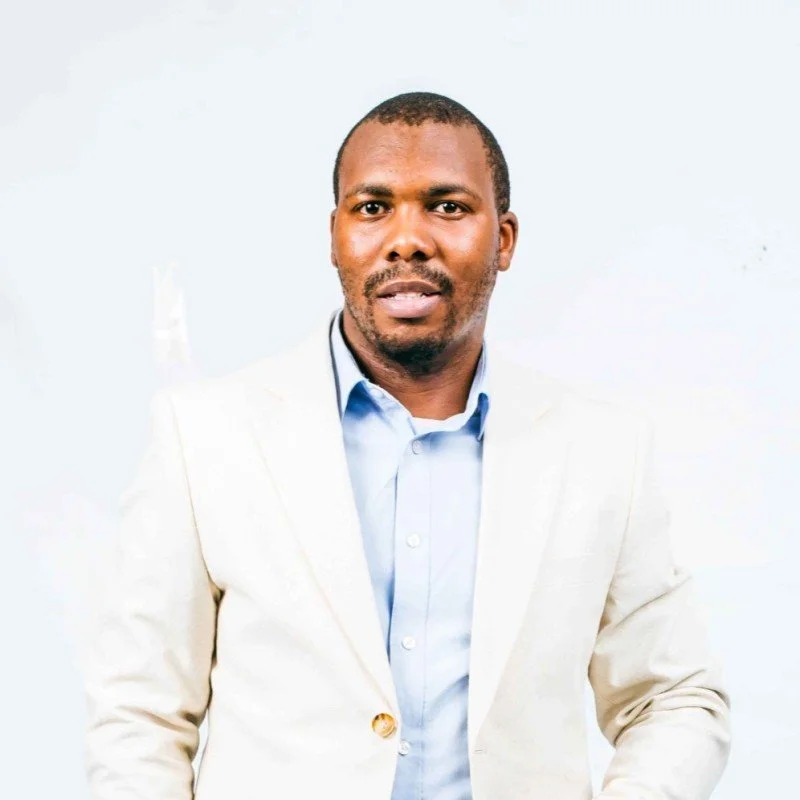
Nkosinathi Sithole
Nkosinathi Sithole is the Director of Litigation at the Socio-Economic Rights Institute of South Africa (SERI), where he oversees strategic litigation to advance the socioeconomic rights of poor communities, homeless people, and residents of informal settlements. He is an attorney with more than eight years of post-admission experience and has rights of appearance in South Africa’s higher courts. Nkosinathi holds an LLB from the University of the Witwatersrand and an LLM in Property Law from the University of South Africa, both awarded with distinction. Nkosinathi will be speaking in Session Three to discuss how anti-migrant policies, border enforcement, detention practices, labor precarity, and xenophobic narratives are being mobilized to redefine belonging and legitimize exclusion.

More speakers will be added in the coming weeks.
More speakers will be added in the coming weeks.
Participant Details
We’re looking for:
lawyers, advanced law students, legal scholars, and legal workers from anywhere in the world with at least 2 years of experience using law to support working-class communities.
We especially welcome people working alongside communities facing criminalization and state repression.
Applicants should be committed to using law and organizing to build social movement power, eager to build long-term relationships with movement lawyers from around the world, and able to attend all eight sessions.
FAQs
Still have questions? Take a look at the FAQ or reach out anytime.
-
No, these sessions and the application are completely free.
-
Applicants must demonstrate a clear commitment to using law and organizing in tandem to build the power of social movements and communities organizing against systemic oppression.
Applicants must be actively engaged in work related to populations facing criminalization, state repression, and mass mobilization and resistance, or have significant experience in these areas.
Applicants must be lawyers, advanced law students, legal scholars, or legal workers from anywhere in the world with at least 2 years of experience using law to build the power of working-class people. Importantly, applicants must be ready and open to cultivating long-term relationships with organizers and other movement lawyers worldwide.
Applicants must commit to attending all 8 sessions of the series.
-
The course will be held in English, Spanish, and Portuguese.
Application deadline: June 29, 2026
Event Calendar
Session 1: Survival Dialogues: Organizing Rage, Defending Joy
This opening session introduces the purpose, structure, and methodology of the Survival Dialogues, along with the co-hosting organizations and shared agreements for engagement.
Participants will explore the current global political landscape through the perspectives of a scholar, a grassroots leader, and a civil society advocate. These insights will offer a clear framework for understanding the rise of authoritarianism and its impacts across communities, movements, institutions, and legal advocacy. The session will also highlight practical strategies that have proven effective in resisting authoritarianism.
The session creates space to reflect on “survival” as both a political and lived practice, grounding analysis in real-world experience and embodied knowledge.
Through collective learning and exchange, participants will begin building a shared foundation for the dialogues ahead. A brief somatic grounding practice will open the space, modeling the integrated approach that will guide the series.
Learning objectives:
By the end of the session, participants will be able to:
Understand the purpose and approach of the Survival Dialogues
Analyze key impacts of rising authoritarianism
Identify effective strategies for resistance
Reflect on survival as a political and lived practice
Build connections for ongoing exchange and collaboration
Session 2: From Authoritarian Playbook to People’s Playbook: Lessons from Hungary and Beyond
This session examines Hungary under Viktor Orbán as a key example of the modern authoritarian playbook—and the forms of resistance that can challenge it. Often described as a “laboratory of illiberalism,” Hungary illustrates how democratic systems can be reshaped from within, using legal and institutional tools to consolidate power while maintaining the appearance of democracy.
Participants will explore how strategies such as constitutional redesign, institutional capture, court-packing, and electoral manipulation have been used to entrench political control. The session will highlight how law itself can be instrumentalized to weaken checks and balances, restrict civic space, and legitimize repression under a formal legal framework.
At the same time, the session will examine how resistance emerges under these conditions. Drawing on the Hungarian experience, it will highlight the role of grassroots organizing, independent journalism, election protection efforts, and coalition-building in challenging authoritarian dominance and creating openings for change.
The session will also explore how authoritarian rule is sustained through narratives, polarization, and the construction of “internal enemies,” and what it takes for that legitimacy to begin to fracture.
Finally, participants will engage in comparative reflection, connecting Hungary to other contexts such as El Salvador and South Korea to identify shared patterns and adaptive resistance strategies across different settings.
Learning objectives
By the end of the session, participants will be able to:
Understand Hungary as a key example of contemporary authoritarianism
Identify core strategies used to consolidate power, including legal and institutional tools
Analyze how law is used to legitimize repression and weaken democratic safeguards
Recognize patterns of civic space restriction and attacks on civil society
Examine how narratives and “internal enemies” are constructed to sustain authority
Draw lessons from resistance strategies across different contexts
Apply insights to movement lawyering and advocacy strategies
Session 3: Xenophobia, Dispossession, and the Politics of Exclusion: Law, Spatial Segregation and Justice through the Lens of South Africa
This session explores xenophobia as a central feature of rising authoritarianism, reflecting a broader logic that constructs certain populations as “enemies” to be controlled, excluded, or expelled.
Focusing on South Africa, the session examines the relationship between law, space, and survival within a historical context shaped by apartheid, dispossession, and spatial segregation. While the Constitution guarantees dignity, equality, and transformation, many communities continue to face evictions, exclusion from urban space, and xenophobic enforcement practices. The session highlights the gap between formal rights and lived realities.
Through case studies and practitioner insights, participants will explore how law can function both as a tool of protection and a mechanism of exclusion. The session creates space to reflect on what it means to practice law in contexts where survival—rather than the full realization of rights—shapes daily life.
A transnational lens will connect the South African experience with other contexts, including the United States and Indonesia, where migration has become a key site of authoritarian politics. Participants will examine how anti-migrant policies, border enforcement, detention, labor precarity, and exclusionary narratives are used to redefine belonging, alongside grassroots strategies of resistance, protection, and solidarity.
Learning objectives
By the end of the session, participants will be able to:
Understand how xenophobia functions within contemporary authoritarianism
Analyze the relationship between law, exclusion, and survival in South Africa
Situate current legal struggles within South Africa’s historical and constitutional context
Examine how law can both protect and marginalize communities
Reflect on the role and limits of movement lawyering in contexts of precarity
Identify practical strategies and challenges from case-based examples
Draw connections across global contexts and resistance efforts
Session 4: Palestine: Genocide, Complicity, and the Crisis of International Law & Global Legal Order
This session offers a critical analysis of Palestine, grounded in the understanding that ongoing practices constitute genocide under international law. Drawing on recent legal and political analyses, it situates current mass violence within longer histories of colonial dispossession and examines its economic dimensions, including the global networks of profit and complicity that sustain it.
The session will explore Gaza not only as a site of extreme violence, but as a turning point that exposes a broader crisis in the global moral and legal order. In this context, participants will examine the limits of international law and the structural impunity reflected in institutions' inability or unwillingness to respond effectively.
Centering Palestinian voices and experiences, the session will critically assess international law as both a tool for accountability and a system shaped by power asymmetries and selective enforcement. It will also examine the role of states, corporations, and financial systems in sustaining conditions of dispossession and control.
Participants will engage with a wider landscape of legal and economic mechanisms, including sanctions regimes, financial restrictions, banking exclusions, and military supply chains, as well as more informal or indirect forms of coercion that shape everyday life and constrain political agency.
At the same time, the session will highlight the strategies Palestinians have developed to survive and sustain life under these conditions, including informal systems of mutual aid, access to resources, and financial circulation.
Learning objectives
By the end of the session, participants will be able to:
Analyze Palestine through the lens of genocide and colonial dispossession
Examine the broader implications for international law and global governance
Assess patterns of impunity and the limits of existing legal frameworks
Understand the role of economic and financial systems in sustaining dispossession
Draw connections to other contexts of violence, extraction, and territorial control
Identify possibilities for solidarity, accompaniment, and collective action
Engage with Palestinian experiences of survival, resilience, and resistance
Session 5: The People vs. Tech Oligarchs: Organizational, Personal, and Digital Security in the Age of Surveillance
This session explores how authoritarianism operates through surveillance, digital control, and the growing concentration of power in large technology companies. It examines how states and tech actors converge in practices of monitoring, criminalization, and data extraction, reshaping the conditions under which movements, communities, and civil society organize and resist.
The session will open with the experience of CAJAR (Colombia), reflecting on decades of surveillance, persecution, and criminalization of movement lawyers and human rights defenders, as well as the strategies developed to sustain their work over time. From this foundation, the discussion expands to the broader landscape of digital surveillance and technological power.
A digital security expert will examine how surveillance technologies are used by both states and private actors, and what this means for dissent, civic space, and democratic life. The session will also highlight practical strategies for protection, adaptation, and resistance.
A transnational dialogue will bring in experiences from countries such as India, Egypt, and Uganda, highlighting how activists and organizations are navigating repression, surveillance, and restrictions on civic space.
By connecting these experiences, the session fosters collective reflection on personal, organizational, and digital security, while strengthening the exchange of concrete protection strategies across contexts.
Learning objectives
By the end of the session, participants will be able to:
Identify patterns of repression targeting movements across contexts
Analyze how surveillance and concentrated tech power shape civic space
Learn from strategies used to resist and navigate repression
Strengthen approaches to personal, organizational, and digital security
Session 6: Courts in Times of Rising Authoritarianism: Between Resistance, Capture and the Struggle for Rights
This session examines how justice systems operate under rising authoritarianism, focusing on both their potential as sites of contestation and their structural limitations.
For social movements, courts have always been spaces of tension. They can offer avenues for protecting rights and challenging abuses, but they are also shaped by exclusion, criminalization, and unequal access to justice. In authoritarian contexts, these tensions intensify.
Participants will explore how courts are being reshaped through processes such as judicial capture, court-packing, political pressure, and executive interference. At the same time, the session will examine how law itself is increasingly used to concentrate power, criminalize dissent, and legitimize repression.
Grounded in experiences from countries such as India, Poland, and Tunisia, the session will analyze how courts respond under pressure—including moments of resistance, accommodation, and institutional fragility. It will also address current challenges, such as the sidelining of judicial decisions and the erosion of judicial independence.
By bringing these experiences into dialogue, the session aims to support a more grounded and strategic understanding of how movements can engage with courts as part of broader efforts to confront authoritarianism.
Learning objectives
By the end of the session, participants will be able to:
Analyze the role of courts under authoritarian pressure, including both potential and limits
Identify key patterns such as judicial capture, court-packing, and executive interference
Learn from diverse experiences of judicial response across contexts
Assess how courts can be used strategically within movement lawyering
Session 7: Confronting The Criminalization of Dissent: Joy, Dissent and Collective Action to Counter State Violence
This session starts from a central premise: authoritarian power depends on containing dissent. Repression is not incidental—it is a core strategy for maintaining control. At the same time, movements and communities continue to resist, adapt, and sustain collective action.
The session examines both sides of this dynamic: how civic space is restricted and how resistance takes shape in response.
Participants will explore how repression operates through the criminalization of protest, police violence, militarized security, attacks on journalists, and surveillance of activists and organizations. These practices are reinforced through legal, political, and administrative frameworks.
Drawing on examples from Argentina and Colombia, the session highlights how public space becomes a site of control through policing, administrative measures, and targeted enforcement against specific groups. It will also examine the use of so-called “less-lethal” weapons and their role in producing harm and fear.
The session situates these trends within a broader global contraction of civic space, including the use of “foreign agent” laws, counterterrorism frameworks, and funding restrictions. It will also address the increasing criminalization of solidarity, including repression of Palestine-related advocacy.
At the same time, the session explores how movements sustain themselves under these conditions, highlighting strategies for protection, collective care, and long-term resilience.
By bringing these experiences into dialogue, the session supports a more grounded understanding of repression and the strategies that enable movements to persist.
Learning objectives
By the end of the session, participants will be able to:
Analyze repression as a core feature of authoritarianism
Identify how civic space is restricted across contexts
Examine how public space is controlled and selectively enforced
Understand the criminalization of solidarity and its impacts
Engage with strategies for protection, care, and resilience
Assess law as both a tool of repression and a site of struggle
Session 8: Organize Rage, Defend Joy: Collective Survival and Political Imagination
This closing session builds on the core themes of the Survival Dialogues—repression, shrinking civic space, institutional breakdown, and the many ways authoritarianism constrains life and political possibility. It turns to a forward-looking question: how do communities continue to live, organize, and create under these conditions?
The session begins from a shared conviction: even as institutions fail or are captured, communities continue to build. In the spaces between and beyond formal structures, people sustain networks of care, solidarity, and collective survival—creating meaning and possibility in the midst of uncertainty.
Grounded in experiences shaped by occupation, dictatorship, racial segregation, displacement, and political persecution, the session approaches survival not simply as endurance, but as a collective and political practice. It recognizes that authoritarianism targets not only rights and institutions, but also memory, culture, relationships, and the capacity to imagine futures.
The session will explore how movements sustain themselves through care, mutual aid, cultural expression, and solidarity. It understands hope not as optimism, but as something practiced—built through struggle, memory, imagination, and the refusal to give up on one another.
Centering voices from communities actively resisting and rebuilding, the session creates space for reflection, connection, and shared learning across contexts—an offering in support of continued struggle and collective possibility.
Learning objectives:
By the end of the session, participants will be able to:
Understand survival as a collective and political practice
Reflect on how communities sustain resistance under conditions of violence and repression
Identify the role of care, culture, and collective memory in sustaining movements
Analyze how communities create spaces of protection and belonging
Share strategies for sustaining hope, connection, and political imagination
Strengthen transnational solidarity and ongoing collaboration