
What are the Survival Dialogues?
The Survival Dialogues series is a curated set of 8 virtual gatherings that bring together movement lawyers from around the world to make sense of the moment we’re in and strengthen how we respond to it. Not at all a typical webinar, each session will combine political analysis with practices that support emotional, physical, and collective resilience, while strengthening our connection and collaboration in the face of rising global authoritarianism.
Apply by June 29

Why Join the Survival Dialogues?
Here’s what sets the Survival Dialogues apart from conventional webinars and political education spaces:
Holistic Analysis: Rather than treating authoritarianism as isolated national trends, this series deepens collective understanding of the “authoritarian playbook” across interconnected local and global contexts.
People’s Strategies: Participants will learn from both emerging and ancestral “people’s playbooks,” drawing on resistance strategies rooted in diverse movements, histories, and geographies.
Transnational Solidarity: The series intentionally builds meaningful relationships across borders, cultivating solidarity as an active, ongoing practice rather than an abstract principle.
Beyond Traditional Learning: This is not a webinar series—it is a restorative, participatory space that weaves political analysis with popular education, somatic practices, art, music, and ancestral knowledge.
Collective Imagination: At its core, the Survival Dialogues strengthen collective hope and political imagination as shared practices, grounding participants in solidarity and sustaining them for long-term struggle.
The Survival Dialogues are about organizing rage, defending joy, and sustaining hope. All sessions will take a global, holistic approach by weaving sharp analysis with artistic, cultural, and somatic experiences. The sessions, developed in partnership with members of the Global Network of Movement Lawyers (GNML), will cover:
A grounding session that orients participants to the Survival Dialogues’ purpose, methodology, and collective learning approach, situating the series in the current global political moment and planting the core question of the series: How must the people’s resistance playbook adapt in these times?
A deep dive into Hungary as a “laboratory of illiberalism,” unpacking contemporary authoritarian tools and the grassroots organizing, journalism, and coalition-building that inform a transnational people’s playbook of resistance. Drawing on the Hungarian experience, the session will compare developments in El Salvador and South Korea.
A critical exploration of how law, space, and migration intersect to produce xenophobic exclusion, using the South African experience as a starting point for a broader comparative reflection. Drawing connections with contexts such as the United States and Indonesia, the session will also highlight legal and grassroots strategies for survival, protection, and justice that resonate across borders.
An urgent examination of Palestine that names ongoing practices of genocide, traces global economic and political complicity, and probes what this moment reveals about the limits and possibilities of international law. Where do we go from here?
A closing gathering that centers survival as a collective political practice, inviting participants to explore how movements organize rage, defend joy, and sustain hope and imagination across long cycles of violence and crisis.
A practice-oriented session on confronting digital repression and tech-driven authoritarianism, grounded in frontline experiences from Russia, India, and Egypt, and focused on concrete organizational, personal, and digital security strategies.
Drawing on experiences from Argentina, Colombia, Nigeria, Spain, and Russia, the session will investigate how protest is criminalized and security forces are militarized through legal and institutional means, alongside the defense strategies movements are developing in response.
A nuanced conversation on the role of courts under democratic erosion, examining both their capture and their potential as contested sites within broader movement strategies to confront authoritarian power, with reference to experiences from Tunisia, India, Poland, among others.
Meet Our Speakers
-
![]()
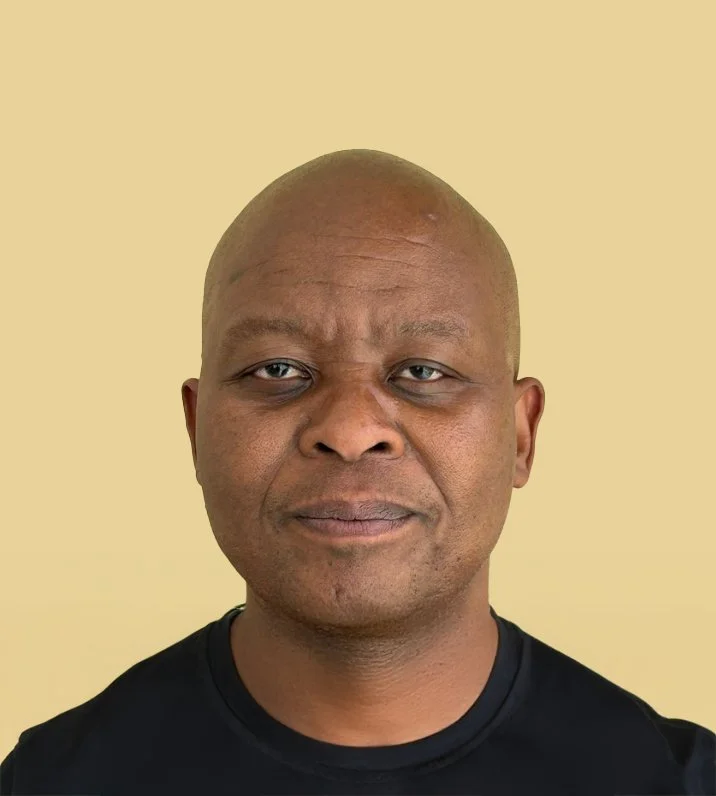
Mazibuko Jara
Mazibuko Kanyiso Jara is a South African pan-Africanist popular educator, strategist, and activist with three decades of work across social justice movements. He is the Executive Director of Zabalaza Pathways Institute in South Africa. He co-founded and led major movements, including the Treatment Action Campaign and the National Coalition for Gay and Lesbian Equality, and served as founding Board Chair of Oxfam South Africa. Mazibuko will be joining us to discuss the current political moment and offer an initial analytical framework for understanding the rise of global authoritarianism.
-
![]()
Danah Abueida
Danah Abueida is a Palestinian lawyer and Legal Officer at the European Legal Support Center, where she works at the intersection of human rights, abolitionist politics, and legal defense of Palestinian advocacy in Europe. Trained in European law at Maastricht University, she draws on her experience in Gaza and a commitment to revolutionary love, collective care, and solidarity with prisoners and communities under repression. Danah will be joining us for Session four to present on the legal landscape beyond genocide, including sanctions regimes, banking restrictions, and indirect or “unspoken” sanctions.
-
![]()
Nkosinathi Sithole
Nkosinathi Sithole is the Director of Litigation at the Socio-Economic Rights Institute of South Africa (SERI), where he oversees strategic litigation to advance the socioeconomic rights of poor communities, homeless people, and residents of informal settlements. He is an attorney with more than eight years of post-admission experience and has rights of appearance in South Africa’s higher courts. Nkosinathi holds an LLB from the University of the Witwatersrand and an LLM in Property Law from the University of South Africa, both awarded with distinction. Nkosinathi will be speaking in Session Three to discuss how anti-migrant policies, border enforcement, detention practices, labor precarity, and xenophobic narratives are being mobilized to redefine belonging and legitimize exclusion.


More speakers will be added in the coming weeks.
More speakers will be added in the coming weeks.
Participant Details
We’re looking for:
lawyers, advanced law students, legal scholars, and legal workers from anywhere in the world with at least 2 years of experience using law to support working-class communities.
We especially welcome people working alongside communities facing criminalization and state repression.
Applicants should be committed to using law and organizing to build social movement power, eager to build long-term relationships with movement lawyers from around the world, and able to attend all eight sessions.
FAQs
Still have questions? Take a look at the FAQ or reach out anytime.
-
No, these sessions and the application are completely free.
-
Applicants must demonstrate a clear commitment to using law and organizing in tandem to build the power of social movements and communities organizing against systemic oppression.
Applicants must be actively engaged in work related to populations facing criminalization, state repression, and mass mobilization and resistance, or have significant experience in these areas.
Applicants must be lawyers, advanced law students, legal scholars, or legal workers from anywhere in the world with at least 2 years of experience using law to build the power of working-class people. Importantly, applicants must be ready and open to cultivating long-term relationships with organizers and other movement lawyers worldwide.
Applicants must commit to attending all 8 sessions of the series.
-
The course will be held in English, Spanish, and Portuguese.
Application deadline: June 29, 2026
There are no upcoming events at this time.