Introduction: What is Non-Cooperation?
When federal judge Mark Wolf resigned after forty years on the bench and from the Department of Justice, he recognized the authoritarian threat in stark terms. A Reagan appointee who spent decades honoring the judicial pact of quiet neutrality, Wolf realized that continuing to work within the captured norms of judicial institutions was no longer protecting institutional integrity. In fact, his ongoing participation was actively masking the courts’ collapse. By giving up his lifetime seat to break the ethical gag of silence, he chose an individual act of resistance known as “non-cooperation” to expose the authoritarian threat.
Some lawyers have been slow to confront authoritarianism with such tactics—but social movements have always known these kinds of threats and have also engaged in non-cooperation efforts as part of their mass resistance against authoritarianism.
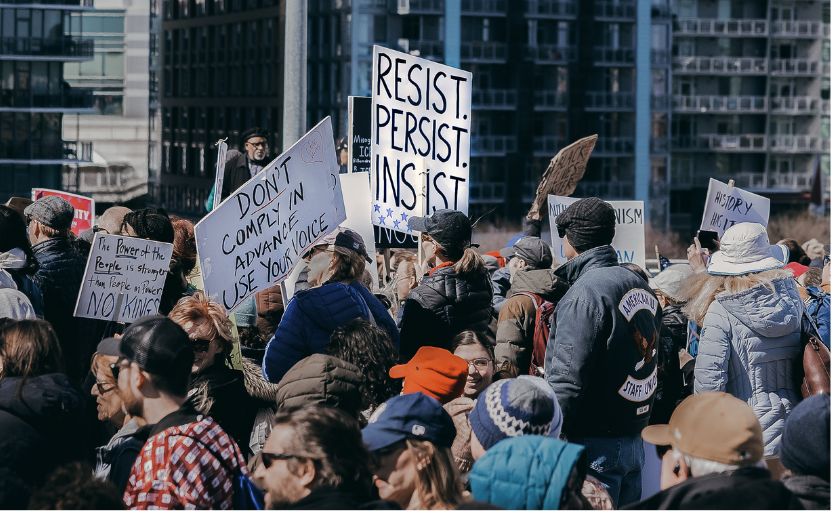
Non-cooperation is refusal to uphold or normalize unjust systems. It can be social: refusing to comply with social norms by offering politeness or tactic approval to authoritarian enforcers or enablers. Think everyday people heckling authoritarian politicians at restaurants, or businesses putting up “ICE out” signs.
Non-cooperation can be political: refusing to obey oppressive policies, participate in rigged or captured institutions, or enact processes designed to degrade. Grand juries refusing to indict protestors facing extreme federal charges and cities disallowing federal agents from staging operations on their land are two examples.
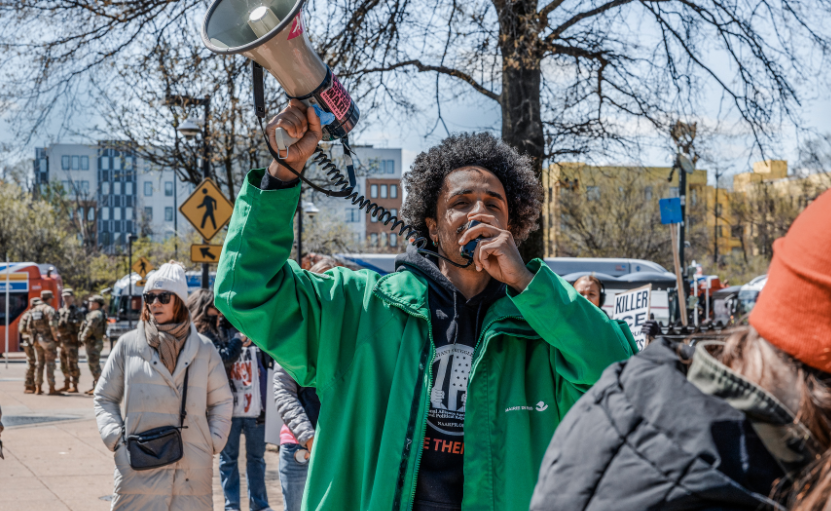
Non-cooperation can also be economic: strikes, boycotts, divestments. Non-cooperation can be quiet or loud, individual or collective, spontaneous or carefully planned—and many forms of it are needed to take down authoritarian regimes.
Regardless of the type of non-cooperation efforts, the lawyer's role is to support the people and organizations that are building collective power through it, and to help keep those movements above ground.
That support is both harder and more valuable than it sounds. Below we list out three concrete ways you can get started with supporting non-cooperation efforts against authoritarianism in your community.
#1 Start with Organized Communities
Before anything else: find out who is already organized in your area and ask to show up–not to advance an agenda, but to listen.
Legal training is traditionally built around expertise and individualized problem-solving. Walking into a room where you are not the expert—where you are, at best, a resource the group may or may not find useful—requires a different posture entirely. It requires asking: What are people already organizing around? What kind of legal support, if any, would be useful? What do these groups need right now that I have the skill set to offer? What would be most helpful for me to do based on what the collective has identified—not the solution I think is needed?
The answers may surprise you. Communities engaged in non-cooperation efforts often have more clarity about their struggles and the pressure that organized communities must exert to achieve their material goals.
What they may lack is access to someone who can clearly explain what rights people have and what risks look like in practice. Lawyers can offer their knowledge and advice without making the decision for organizers or wrapping every answer in caveats that makes action feel impossible.
Spend time getting to know the organizers in your community. They may already be working on projects that you can plug into, and once you’re there, start to listen and build relationships with them.
Make yourself available but don’t dictate the process.
#2 Understand the Terrain
In Minneapolis, when federal immigration enforcement surged, the legal response that worked was not individual attorneys filing emergency motions in isolation. It was a coordinated table—immigration lawyers, housing advocates, civil rights attorneys, and protesters' rights organizers—all plugged into the same organizing infrastructure, sharing information, and coordinating in near-real time.
The question driving that work wasn't "what legal maneuver can I execute?" It was "what does this campaign need to keep moving safely and reach its goals? What research is needed? Are there strategic points of intervention against our opponents?"
The answers to those questions relied on understanding the terrain. What did organizing in the state look like? What were the political pressure points? What did the community want to achieve?
Understanding the terrain also means thinking expansively about the types of legal support that might be needed to defend organizing, and who can offer that support. Groups may need protest consults, criminal defense, immigration, or protection from politically motivated attacks, especially if they are 501(c)3 organizations.
A single lawyer cannot offer every piece of legal support a group might need. That’s why it’s important to build relationships with lawyers with different realms of expertise so you can strategize together and know who to call on when you need to.
Legal work that is focused on the needs on the ground strengthens the larger strategy. It reduces the cost of collective action, expands the protective perimeter around organizers and movements engaged in non-cooperation, and puts pressure on authoritarians.
Understanding the terrain requires building relationships with organizers and other lawyers, but it also requires an in-depth analysis of legal questions, pressure points, and the larger political and social landscape.
Start to work collaboratively and refer outward when something falls outside your lane.
#3 Share Information about Risks without Chilling Courageous Action
Non-cooperation frequently requires stepping into legal gray zones and sometimes deliberately defying unjust rules.
A lawyer who leans too much into their training could immediately activate their intention to “protect their clients” as the most important first step to take or they might focus on worst-case scenarios. This approach fails to provide strategic utility and could chill a group’s non-cooperation tactics.
Your job is to share what you know about risks, acknowledge what’s unknown given shifting authoritarian actions, and leave space for communities to make their own informed decisions about what levels of risk they want to take on.
Responsibly sharing risk analysis means:
Defining risk tiers: Clearly lay out the relevant statutes, different charges, and the floor and ceiling of potential consequences. What separates an infraction from a misdemeanor? At what exact point does trespass cross into a felony? What might trigger a larger response from the cops? Make sure that groups also understand different levels of risk that people may carry based on their immigration status, race, gender identity, youth and more so that they can make informed decisions about who takes what risks.
Building protective mitigations: If an action carries inherent arrest risk, design legal counterweights before the action occurs. Train designated legal observers and establish rapid bail turnaround funds, for example.
Distinguishing between actual risks and authoritarian scare tactics: Authoritarians have increasingly threatened and brought extreme charges against those engaging in protest—terrorism, racketeering, assault and more. But many of these cases have collapsed in the face of scrutiny, and it does a disservice to movements when lawyers drum up fears about the worst possible consequences without sharing the circumstances under which extreme charges were brought and how rarely they come to pass. Help organizers know their risks, understand dangers and the shifting terrain, assess the likelihood of potential consequences and make informed decisions about their tactics.
When you give organizers a broad view of what’s possible and then plan for those possibilities, you give community resistance teeth.
Pick a Place to Start
If you're still wondering where to start, we encourage you to pick one of the following entry points and go from there:
Attend a local organizing meeting and listen without offering anything.
Map the legal resources in your area—who does what, where the gaps are, who's connected to movement work and who isn't.
Offer one specific, practical skill to a group you've already been in contact with after you’ve built a meaningful relationship with the group.
Reach out to lawyers in a different practice area and ask what they're seeing on the ground.
Ask a movement group what legal support would be most useful.
Commit to showing up consistently over the next six months, not just when there's a crisis.
The entry point to supporting non-cooperation is not a traditional legal pathway. It isn’t a landmark filing or a defining courtroom moment. Lawyering in community requires showing up consistently, being in relationship, and over time, building the kind of trust that allows your community to know they can count on you.
The goal is to be part of a broader legal infrastructure that makes it safer, sustainable, and more effective for communities to withdraw consent from unjust systems and to build the power needed to defeat authoritarian projects that go against what most of us believe: that this is a democracy worth fighting for.
Liked this read? Explore more from our Movement Law Lab Blog.